Phlebotomy Training Detroit, Michigan

Learn the foundations. Practice with purpose.

Build foundational phlebotomy skills through instructor-led learning and supervised practice in a focused Detroit training environment.

  • Hands-on learning
  • Instructor-led
  • Detroit-rooted

Program Overview

Understand the role before you begin the training.

Phlebotomy combines technical care, attention to detail, and clear communication with patients and donors. Understanding the work helps you make a more confident training decision.

The role in context

What phlebotomists do

Phlebotomists collect blood from patients and donors for purposes such as testing, transfusions, research, and blood donations.

The work also calls for careful identification, accurate labeling, clean practices, and calm communication.
A possible fit for your next step

This training direction may be worth exploring if you...

  • 01 Are exploring an entry point into healthcare You want to understand a focused clinical role and its responsibilities.
  • 02 Value focused learning and practical development You prefer building knowledge step by step in a structured environment.
  • 03 Want to build confidence working with people You recognize that technical care and clear communication work together.

What Students Learn

Build knowledge one essential skill at a time.

PETC's two-week Phlebotomy course combines classroom instruction with hands-on clinical practice to build foundational knowledge, careful technique, and professional habits.

2-Week Course Classroom Instruction Onsite Clinical Practice
  1. 01

    Introduction to Venipuncture

    Build foundational understanding of venipuncture concepts, preparation, procedure awareness, and careful technique.

  2. 02

    Patient Privacy & HIPAA

    Learn patient-privacy expectations, professional conduct, confidentiality, and responsible behavior in a healthcare setting.

  3. 03

    Medical Terminology

    Develop familiarity with terminology used in clinical communication, instructions, specimen work, and documentation.

  4. 04

    Circulatory Physiology

    Review circulatory-system concepts that provide important context for venipuncture, blood collection, and specimen work.

  5. 05

    Specimen Collection Lab

    Practice specimen identification, collection, labeling, handling, and the attention to detail required for accurate work.

  6. 06

    Advanced Venipuncture

    Build on foundational technique through additional instruction and increasingly focused venipuncture practice.

  7. 07

    Basic CPR & First Aid

    Receive foundational instruction in basic CPR and First Aid as part of the classroom curriculum.

  8. 08

    Onsite Clinical Practice

    Complete supervised onsite clinical practice that includes up to 50 blood draws as students develop practical experience.

Hands-On Training

Turn foundational knowledge into careful, guided practice.

Students connect classroom concepts with instructor-led demonstrations and guided skill development in a focused learning environment.

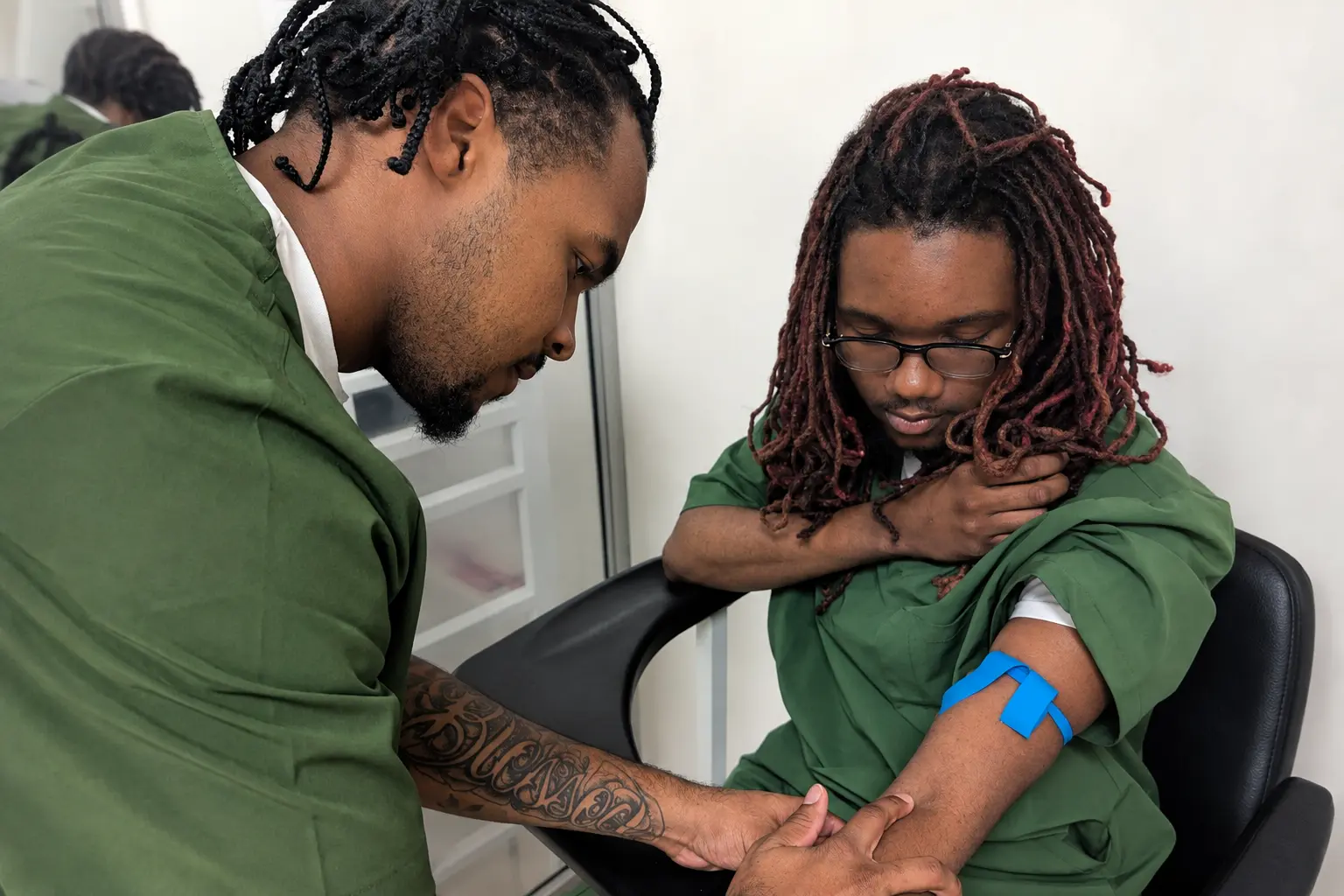
PETC students practicing vein assessment and tourniquet placement during hands-on Phlebotomy Training
Real practice. Instructor guidance. Focused skill development.
01

Observe

See each step in context

Review preparation, safety-minded habits, materials, and the sequence behind careful specimen collection.

02

Practice

Develop skills with guidance

Build familiarity with technique, identification, labeling, handling, and professional patient interaction.

03

Refine

Strengthen habits through feedback

Use instructor feedback to improve consistency, communication, attention to detail, and confidence over time.

Student Support

Build more than technical skill. Build confidence in the process.

A focused learning environment can help students ask better questions, use feedback, and develop professional habits alongside practical skills.

01

Questions and communication

Stay engaged by asking questions, listening carefully, and communicating when clarification is needed.

02

Feedback and refinement

Use instructor feedback to recognize what is working and identify where greater attention may help.

03

Professional habits

Practice reliability, respectful interaction, preparation, and the attention to detail expected in healthcare settings.

04

Next-step clarity

Build a clearer understanding of the role, the learning process, and the questions to ask before moving forward.

Student effort matters. Preparation, participation, and consistent practice remain essential parts of progress.

Before You Enroll

Know what you’ll need before choosing a class.

Review the current Phlebotomy admission requirements before enrolling so you can prepare your documents, attire, and next steps.

01

Age & Education

Students must be at least 17 years old and have a high school diploma or GED.

02

TB Screening

A negative TB skin test is required as part of the program’s admission and clinical-readiness requirements.

03

Required Scrubs

Students should plan to attend training in black or navy-blue scrubs.

04

Enrollment Steps

Select your class and complete tuition payment to secure enrollment in the program.